
Opinion
Psychedelics in mental health: balancing promise with prudence
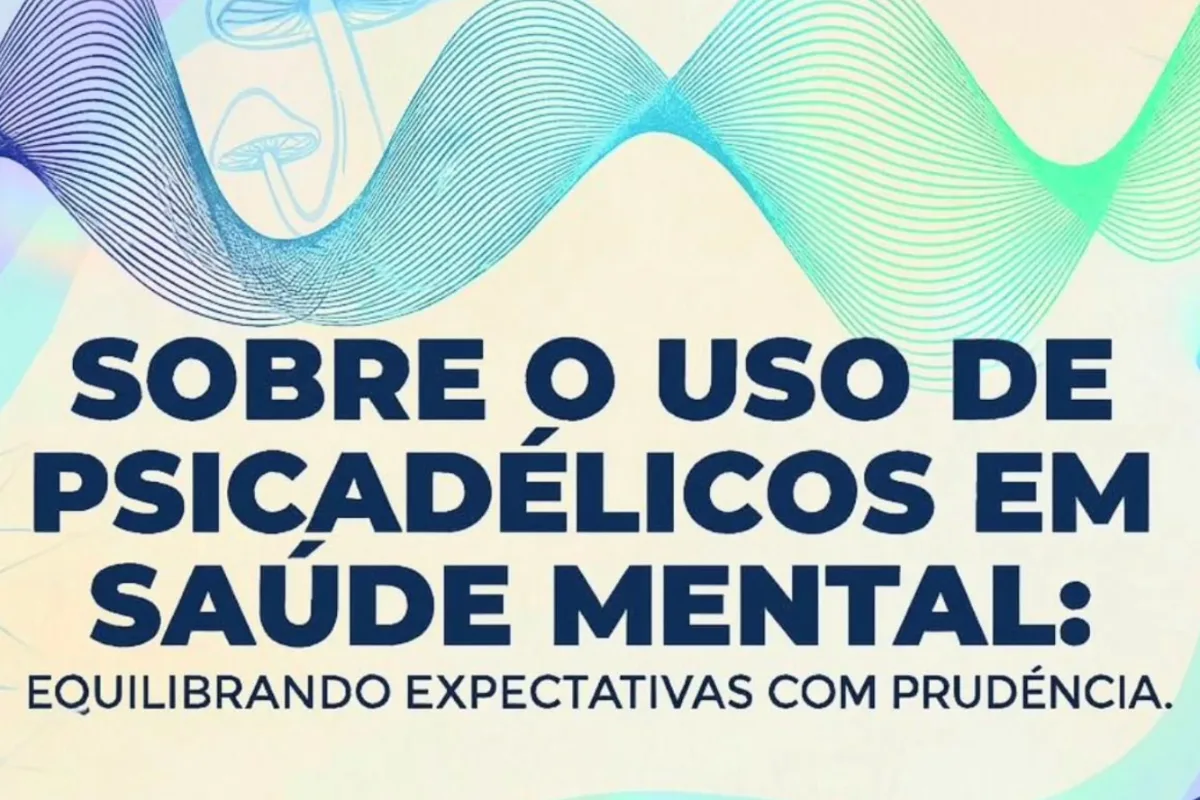
Acknowledges the potential of psychedelic substances but warns against use outside a clinical setting, fuelled by enthusiasm on social media. Two cases illustrate the risk: panic and insomnia after a weekend retreat without rigorous preparation, and a psychotic episode after experimentation encouraged online.
Key ideas
- Scientific interest in these substances is real, but the evidence does not support use outside a clinical context.
- The psychedelic experience requires selection, preparation, an appropriate setting and integration.
- That context can only be ensured in a clinical environment, with trained professionals.
Read more
Context
An opinion piece published in Saúde Online on 21 July 2023. It starts from the “turnaround” in psychiatry’s relationship with psychedelics: substances once sidelined by science are now being studied, with results described as promising for ketamine and, in trials, for psilocybin and MDMA in treatment-resistant depression and post-traumatic stress disorder. The author welcomes the growing awareness of the subject, but is concerned about the exaggerated promises and inappropriate practices emerging from enthusiasm on social media.
The two cases described
- A patient with a long history of depression responded well to ketamine-assisted therapy, but the effect did not last in the long term, which the article notes can happen with any treatment. Prompted by reading online and by a documentary, she turned down other options and attended a weekend psilocybin retreat, a treatment not available in a medical setting in Portugal. She came back with panic, generalised anxiety and almost total insomnia, and needed medication to control these symptoms.
- A second patient developed psychotic symptoms after using psychedelics on his own initiative, having listened to an encouraging podcast. He was admitted to hospital and, at the time of writing, remained on injectable antipsychotic treatment.
- Names and details were changed in the original to protect patient confidentiality.
The role of the unconscious
The article recalls that, according to Freud, repression serves a self-preserving function and helps with emotional regulation. In situations such as severe trauma, repression merely postpones facing the pain; but releasing traumatic material over a weekend with a potent psychedelic agent, without rigorous preparation and without the capacity to integrate what emerges, makes it hard to defend the usefulness of that approach against its risk.
How the article concludes
The author remains convinced of the transformative value of psychedelics for psychiatry, but argues that inducing a psychedelic state requires careful preparation, a favourable setting, experience and training to support sometimes violent inner experiences, and effective integration. Without this, he warns, the field risks returning to the “prohibitionist obscurantism” of the 1960s and 1970s. Hence the need to balance promise with prudence.
Zuzarte P. Psicadélicos em Saúde Mental: Equilibrando a Promessa com a Prudência. Saúde Online [Internet]. 2023 jul 21. Disponível em: https://saudeonline.pt/psicadelicos-em-saude-mental-equilibrando-a-promessa-com-a-prudencia/
Psychedelic therapy in a clinical setting: Discover KETAMED: psychedelic therapy (opens in a new tab)
More publications

Psychedelic therapy and the psychotherapies that accompany it remain under research, and further studies are still needed before a formal clinical indication. In Portugal, psilocybin and MDMA may only be used in authorised clinical trials.
Educational health information, prepared taking into account the position of the College of Psychiatry of the Portuguese Medical Association on the use of psychedelics (CEP-2023-R-02). It is not advertising for medicines nor a treatment recommendation, and it does not replace a medical consultation.
A psychiatric assessment can be the first step.
If you are looking for psychedelic therapy, KETAMED is the clinic dedicated to this field.
Discover KETAMED (opens in a new tab)
Follow KETAMED: Instagram (opens in a new tab) · Facebook (opens in a new tab)